
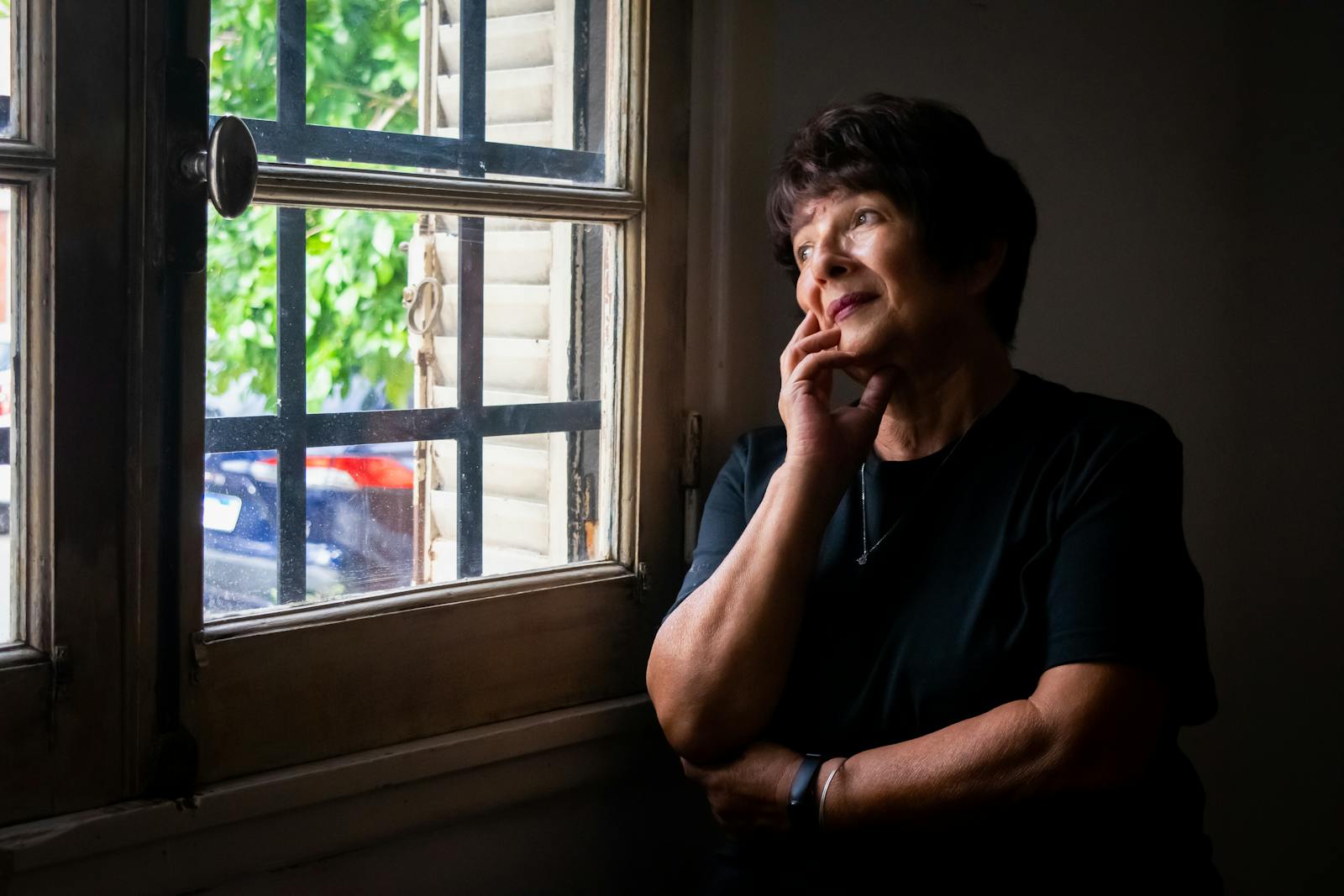
You raised them in the same house. They shared bedrooms and birthday parties and holidays around the same table. They fought as kids — all siblings do — but you always assumed they would grow up and figure it out. That one day they would be friends. That your family would stay whole. And now your adult children will not speak to each other. Maybe it started with a disagreement that spiraled out of control. Maybe it was a slow drift that turned into a wall. Maybe it involves a spouse or partner who came between them. Maybe one of them betrayed a confidence — shared a secret that was never theirs to share, or stole an idea that belonged to someone else. Maybe it goes back to something from childhood that you thought was resolved but clearly was not. Whatever the cause you are living in the wreckage of it — caught in the middle, grieving the family you thought you would always have, and feeling utterly helpless to fix it. This post is for the parent in that position. And it is also for the sibling who has been hurt and is wondering whether they will ever be able to have a relationship with their brother or sister again — even a different kind of relationship than the one they had before.
How Common Is Adult Sibling Estrangement?
Far more common than most people realize. Research shows that as many as two in five adults report at least one period of estrangement from a parent or adult sibling during their lifetime. Sibling estrangement is actually more common than parent-child estrangement — affecting approximately 17 percent of adults compared to 12 percent for parent-child relationships.
These numbers mean that if you are a parent watching your adult children refuse to speak to each other or a sibling who has cut off contact with a brother or sister, you are not alone and you are not unusual. Sibling estrangement is a widespread family experience that carries enormous emotional weight — and almost nobody talks about it openly.
Why Do Adult Siblings Stop Talking to Each Other?
Adult sibling estrangement rarely has a single cause. It is almost always the result of multiple factors that compound over time until the relationship reaches a breaking point.
Unresolved Childhood Dynamics
The roots of adult sibling conflict often reach all the way back to childhood — perceived favoritism, competition for parental attention, differences in how siblings were disciplined or supported, and roles that were assigned early and never renegotiated. The golden child and the scapegoat. The responsible one and the wild one. The one who could do no wrong and the one who could never do enough. These dynamics do not disappear when children grow up. They go underground and resurface with devastating force during family stress, inheritance disputes, or caregiving decisions.
Betrayal of Trust
Sometimes a sibling does something specific and deeply personal that breaks the relationship. They share a secret that was told in confidence. They take credit for an idea that was not theirs. They lie about something important. They side against you during a family crisis. These betrayals cut deeper than almost any other kind because the person who hurt you is someone you have known your entire life — someone you assumed was safe. The wound is not just about what they did. It is about who they turned out to be.
Spouses and Partners
One of the most common triggers for adult sibling estrangement is the introduction of a new partner who changes the family dynamic. A spouse who is perceived as controlling, toxic, or divisive can drive a wedge between siblings that feels impossible to remove without also threatening the marriage.
Money and Inheritance
Financial disputes — particularly around inheritance, family businesses, caregiving costs, and perceived inequity — are one of the most common and destructive triggers. Money becomes a proxy for love. Who got more becomes who was loved more.
Different Values and Life Paths
As adults siblings sometimes grow into fundamentally different people with different values, beliefs, political views, or lifestyles. What was once a manageable difference becomes an unbridgeable divide — especially in today’s polarized social and political landscape.
Caregiving Disputes
When a parent becomes ill or needs care the question of who does what often exposes deep fault lines. The sibling who does the majority of caregiving may resent those who do not. And the parent at the center of it all may feel guilty for being the reason their children are fighting.

What Does Sibling Estrangement Do to a Parent?
This is the part that almost nobody writes about.
Grief Without a Death
You are grieving a family that still exists but no longer functions as a whole. You cannot have everyone at the same holiday table. You live in a state of perpetual loss that has no funeral, no closure, and no casseroles from neighbors. It is a grief that nobody sees and few people understand.
Guilt and Self-Blame
Most parents spend significant time wondering what they did wrong. Was it something from childhood? Did I favor one over the other? Could I have prevented this? The guilt can be crushing — even when the estrangement has nothing to do with your parenting.
The Impossible Middle
You love all of your children. And when they are in conflict you are asked — implicitly or explicitly — to choose a side. There is no position that does not cost you something.
The Let Them Theory — Mel Robbins and the Power of Letting Go
Mel Robbins’ Let Them Theory has become one of the most talked about relationship frameworks in recent years — and it applies to sibling estrangement with profound clarity. The core idea is disarmingly simple. Stop trying to control what other people say, think, and do. Let them be who they are. And redirect all that energy you have been spending on trying to change them toward the one person you can actually control — yourself.
Robbins writes about how much energy most people waste fighting to change people, battling to control situations, and worrying about what others think or do. She describes the freedom that comes from embracing a fundamental law of human nature — that you cannot control another person’s choices, only your own response.
For a parent watching their adult children refuse to speak to each other this is both the hardest and most liberating truth available. You cannot make your children reconcile. You cannot force them to forgive each other. You cannot engineer a conversation that undoes years of hurt. Let them. Let them be angry. Let them be stubborn. Let them choose distance. And then — and this is the second half of Robbins’ framework that most people miss — let yourself stop carrying the weight of a problem that was never yours to solve.
Robbins calls this second part the Let Me. Let me stop making their conflict my identity. Let me stop trying to fix something that only they can fix. Let me grieve what I have lost and find peace with what remains. Let me take care of myself so I have something left to give.
This is not passive. It is not giving up. It is a radical redirection of energy from the uncontrollable to the controllable. And for many parents trapped in the middle of sibling estrangement it is the first breath of relief they have felt in years.
The Art of Dropping the Problem
There is a concept in therapy that sounds almost too simple to be real — but it is one of the most powerful shifts a person can make. Just drop the problem. Not solve it. Not fix it. Not figure it out. Drop it. Set it down. Walk away from the part of it that is not yours to carry.
This does not mean you stop caring. It does not mean you pretend the estrangement does not exist. It means you stop holding it as your personal responsibility to resolve. You stop replaying the conversations in your head. You stop strategizing about how to get them in the same room. You stop losing sleep over a conflict between two adults who are capable of managing their own relationships.
The image that helps many people is this — imagine you have been carrying a boulder up a hill for years. The boulder is your children’s conflict. You have been holding it, pushing it, straining under it, believing that if you just push hard enough it will reach the top and everything will be fine. Now imagine setting it down. Just letting it sit there on the hillside. Walking away from it. Not forever necessarily — but for now. For today. The boulder does not disappear. But you are no longer crushed by the weight of it. That is what dropping the problem feels like.
What If You Are the Sibling Who Was Hurt?
If you are the one who was betrayed — if your brother shared your secret, if your sister stole your idea, if someone in your family did something that made you never want to speak to them again — you are probably asking yourself a different question than the parent in the middle is asking. You are asking whether you can ever trust this person again. And the honest answer is maybe — but not in the same way.
What Would Life Look Like Without Them?
Before committing to permanent estrangement it is worth sitting with this question honestly. What does a life without your sibling in it actually look like? Not in the heat of the moment. Not in the aftermath of the betrayal. But in ten years. In twenty years. At your parent’s funeral. At the holidays when the empty chair becomes permanent. For many people the answer is — a sad life. A life with a hole in it that nothing else quite fills. That does not mean you have to pretend the betrayal did not happen. It does not mean you have to go back to the relationship you had before. But it might mean that some version of a relationship — a different, smaller, more carefully boundaried version — is better than no relationship at all.
Rewriting the Rules — The Narcissist Boundary Model
There is a framework used in therapy for people who have someone in their life who is difficult, unreliable, or has betrayed their trust — and the principles apply directly to sibling estrangement even when the sibling is not a narcissist.
The core idea is this — you do not have to choose between complete closeness and complete estrangement. You can rewrite the rules of the relationship. You can choose what this person gets access to and what they do not. You can redesign the relationship from the inside based on what you now know about who this person actually is.
In practice this looks like limiting what you share. If your sibling betrayed a confidence you do not have to tell them your deepest secrets ever again. You can have a relationship that is warm but not vulnerable — connected but not exposed. You share holiday dinners but not your private fears. You call on birthdays but do not ask for advice. You show up for the big moments but protect yourself in the small ones.
It looks like limiting time and frequency. You do not have to see them every week or even every month. You can choose the dose. Maybe you see them at family gatherings twice a year and that is enough. Maybe you have a monthly phone call that lasts fifteen minutes. The relationship does not have to be all or nothing. It can be precisely calibrated to the level of trust that currently exists.
It looks like accepting who they are rather than who you wish they were. This is where Mel Robbins’ Let Them Theory connects directly. Let them be the person who cannot keep a secret. Let them be the person who takes credit for things. Let them be who they are — and then design your relationship around that reality rather than around the fantasy of who you want them to be.
This is not settling. It is strategic. It is choosing a smaller, safer version of a relationship over no relationship at all — because for many people some connection with a sibling, even an imperfect one, is better than a lifetime of absence.
When Should You Consider Family Therapy?
Family therapy can be valuable at multiple points in this process — but it requires willingness from the participants.
When One or Both Siblings Are Willing to Try
If your adult children or you and your sibling are open to the possibility of working on the relationship a family therapist provides the neutral, structured environment that makes productive conversation possible. Unlike conversations at the kitchen table therapy has ground rules, a facilitator, and a framework for navigating conflict without escalation.
When You Need Individual Support
Even if no one else will go to therapy you can benefit enormously from individual therapy to process what you are going through — whether you are the parent in the middle or the sibling who was hurt. A therapist can help you work through your grief, examine your guilt or anger, develop healthier boundaries, practice letting go of what you cannot control, and find a way to live with a situation that may not resolve on your timeline.
When the Estrangement Is Affecting Your Health
Chronic family stress takes a real toll on physical and mental health. If you are experiencing depression, anxiety, insomnia, or physical symptoms related to the estrangement, professional support is not just helpful — it is necessary.
What If They Never Reconcile?
This is the question you are probably most afraid to ask. And the honest answer is that some sibling estrangements do not resolve. Some are temporary and heal with time. Others become permanent.
If reconciliation does not happen the work becomes about finding a way to live with the loss — to love all of your children fully even when they cannot love each other, to let go of the family you imagined and grieve it properly, and to find peace in the family you actually have rather than the one you wanted.
Mel Robbins would say it this way — let them make their choices. And let yourself find peace anyway.
This is extraordinarily hard. And it is work that a therapist can genuinely help with.
Do You Offer Family Therapy in Montana?
Yes. Sunflower Counseling Montana offers family therapy, individual therapy for parents navigating family estrangement, and therapy for adult siblings at our in-person locations in Missoula, Kalispell, and Butte, as well as online therapy for clients throughout Montana. Our therapists are experienced at working with families in conflict and understand the unique pain of watching people you love refuse to be in each other’s lives.
You did not fail as a parent. And if you are the sibling who was hurt you did not fail at being a sibling. Sometimes relationships break. The question is not whether you can go back to what you had — you probably cannot. The question is whether you can build something new. Something smaller, maybe. Something more careful. But something real. And that is worth exploring — with the right support.
Frequently Asked Questions About Adult Sibling Estrangement
Q: How common is adult sibling estrangement?
A: Research shows that as many as two in five adults report at least one period of estrangement from a parent or sibling. Sibling estrangement affects approximately 17 percent of adults — more common than parent-child estrangement at 12 percent.
Q: Why do adult siblings stop talking to each other?
A: Common causes include unresolved childhood dynamics like perceived favoritism, betrayal of trust such as sharing secrets or taking credit for ideas, conflicts involving spouses or partners, financial and inheritance disputes, caregiving disagreements, and divergent values and life paths.
Q: What is the Let Them Theory and how does it apply to sibling estrangement?
A: Mel Robbins’ Let Them Theory is about stopping the exhausting cycle of trying to control what other people say, think, and do — and redirecting that energy toward yourself. For parents caught in sibling estrangement it means letting your children make their own choices while giving yourself permission to stop carrying the weight of a problem that is not yours to solve.
Q: Can I have a relationship with a sibling who betrayed my trust?
A: Possibly — but not the same relationship you had before. You can rewrite the rules by limiting what you share, reducing the frequency and depth of contact, and accepting who the person actually is rather than who you wish they were. A smaller, more carefully boundaried relationship may be preferable to complete estrangement.
Q: What should I do as a parent when my adult children are estranged?
A: Do not take sides. Maintain your individual relationship with each child. Stop trying to mediate. Name your pain honestly without weaponizing it. Consider practicing Mel Robbins’ Let Them approach. And get professional support for yourself.
Q: Can family therapy help with sibling estrangement?
A: Yes — when participants are willing. A family therapist provides a neutral structured environment for productive conversation. Even if others refuse therapy individual therapy for yourself can help you process grief, develop boundaries, and practice letting go of what you cannot control.
Q: What if my adult children never reconcile?
A: Some estrangements are temporary and others become permanent. If reconciliation does not happen the work becomes about finding a way to live with the loss — grieving the family you imagined and finding peace with the family you actually have.
Q: Do you offer family therapy in Montana?
A: Yes. Sunflower Counseling Montana offers family therapy, individual therapy for parents navigating estrangement, and therapy for adult siblings at our locations in Missoula, Kalispell, and Butte, as well as online therapy throughout Montana.
Q: Is family therapy covered by insurance in Montana?
A: Coverage for family therapy varies by insurance plan. Contact Sunflower Counseling Montana and we will help clarify your benefits and discuss affordable options before your first appointment.
Call or text Sunflower Counseling Montana today to get started: (406) 214-3810 or email hello@sunflowercounseling.com.
Serving clients in person in Missoula, Kalispell, and Butte — and online throughout Montana.
About the Author: Marie is a Licensed Clinical Professional Counselor (LCPC) and Clinical Director at Sunflower Counseling Montana, specializing in children, teens, families, and trauma-informed care across Montana.