
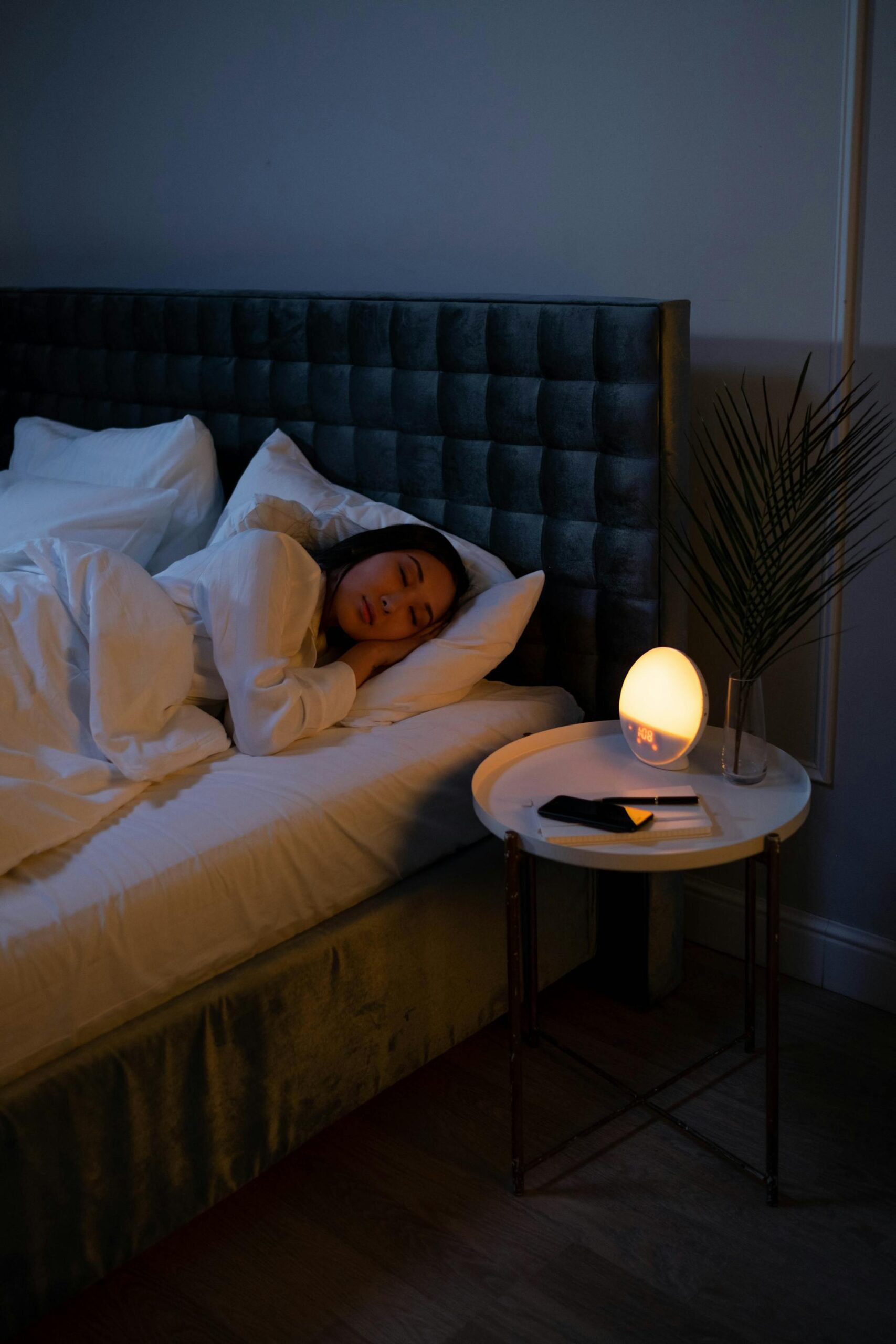
If you could only do one thing for your mental health what should it be? Not therapy. Not exercise. Not meditation. Sleep. That may sound surprising coming from a counseling practice but it is the truth — and the science behind it is overwhelming. Every single mental health condition we treat at Sunflower Counseling Montana — anxiety, depression, trauma, PTSD, relationship difficulties, substance use — is made significantly worse by poor sleep. And every single one of them responds better to treatment when sleep is prioritized. This post is about how to make sleep your number one priority and the specific science-backed strategies that actually work.
Why Is Sleep the Foundation of Mental Health?
Bryan Johnson — the tech entrepreneur who spends over two million dollars a year on his Blueprint longevity protocol — calls himself a professional sleeper. He has said that if you could only do one thing for your health it should be sleep. And the data backs him up dramatically.
Being constantly awake for 18 hours produces cognitive impairment equivalent to a blood alcohol content of 0.05 percent. Stay awake for 24 hours and it rises to 0.1 percent — over the legal limit to drive. A single night of four hours of sleep produced a 70 percent reduction in natural killer cell activity in research participants — the immune cells that fight cancer. Six hours or less of sleep on average makes you 4.2 times more likely to catch a common cold.
But the mental health implications are even more striking. Sleep deprivation reduces your prefrontal cortex function — the part of your brain responsible for emotional regulation, impulse control, and rational decision-making. At the same time it amplifies your amygdala — the part of your brain that processes fear and threat. The result is a brain that is simultaneously less capable of managing emotions and more reactive to perceived danger. That is the neurological recipe for anxiety, depression, irritability, and poor decision-making.
Every therapist at Sunflower Counseling Montana will tell you the same thing — when a client’s sleep improves their therapy progresses faster across the board.
The Blue Light Problem — Why Screens Before Bed Destroy Your Sleep
Your body produces melatonin — the hormone that signals it is time to sleep — in response to darkness. Blue light from phones, tablets, laptops, and televisions suppresses melatonin production and tells your brain it is still daytime. This is not subtle. Research shows that blue light exposure in the two hours before bed can delay melatonin onset by up to 90 minutes and significantly reduce sleep quality even when total sleep duration appears adequate.
Think about what most people do in the hour before bed. They scroll through social media. They watch television. They respond to emails. They check the news. Every one of these activities floods their eyes with blue light at the exact moment their brain is trying to wind down for sleep. It is the equivalent of drinking coffee and then wondering why you cannot fall asleep.
Blue Light Glasses as a Sleep Trigger
Some people have found that wearing blue light blocking glasses in the evening serves a dual purpose. The glasses filter the blue light spectrum — but perhaps more importantly they create a psychological trigger. Putting on blue light glasses becomes a signal to the brain that the wind-down process has begun. Over time this association strengthens and the simple act of putting on the glasses begins to initiate relaxation before the glasses themselves have done any filtering. This is the power of consistent behavioral triggers in building a sleep routine.
Red Light Before Bed — The Science of Switching Your Brain Into Sleep Mode
If blue light suppresses melatonin and keeps you awake, red light does the opposite. Red wavelength light does not suppress melatonin production and research suggests it may actually support it. Bryan Johnson dims all lights in his home in the evening and switches to red wavelength bulbs as part of his wind-down protocol. He is in bed by 8:30 PM.
You do not need to spend thousands of dollars on a red light therapy panel to benefit from this. Simply replacing the bulbs in your bedroom and bathroom with warm red or amber toned bulbs — or using a basic red light lamp on your nightstand — creates an environment that supports melatonin production rather than suppressing it. The shift from bright overhead lighting to warm dim red-toned lighting one to two hours before bed is one of the simplest and most effective sleep interventions available.

The Calm App and the Power of Audio Sleep Triggers
The Calm app has become one of the most popular sleep tools in the world for a reason — it works. Calm’s sleep stories are narrated by voices designed to be deeply soothing and rhythmic. The stories are intentionally unexciting — gently paced narratives about train journeys, nature walks, and quiet adventures that give your mind something to follow without stimulating it.
One of Calm’s most beloved sleep stories features Matthew McConaughey guiding listeners into a meditation about wonder and the present moment. His slow drawling voice becomes an anchor — something for the anxious mind to hold onto instead of its own racing thoughts. The genius of this approach is that it redirects attention from internal worry to external narration without requiring effort or concentration.
The sound of a train is another powerful sleep trigger used in many audio sleep tools. The rhythmic sound of wheels on tracks, the gentle rocking sensation it evokes, and the association with travel and letting go — being carried somewhere without having to drive — all contribute to a neurological state that is conducive to sleep. Many people find that consistent use of these audio tools creates a conditioned response over time — the moment the familiar voice or sound begins their nervous system starts to relax automatically.
Sleep Trackers — The Oura Ring and Knowing Your Data
You cannot optimize what you do not measure. Sleep trackers like the Oura Ring have revolutionized how people understand their sleep by providing detailed data on sleep stages — deep sleep, REM, light sleep — along with heart rate variability, body temperature, and respiratory rate throughout the night.
The value of a sleep tracker is not just the data itself — it is the behavioral change the data inspires. When you can see in black and white that your deep sleep dropped by 40 percent on nights you had alcohol, or that your REM sleep doubled when you stopped eating three hours before bed, you develop an evidence-based understanding of what actually works for your specific body. This transforms sleep from a vague aspiration into a measurable project with clear inputs and outputs.
Bryan Johnson tracks his sleep religiously through wearable technology and credits his sleep tracking as one of the foundational tools that enabled him to achieve eight months of perfect sleep scores. You do not need to spend two million dollars to benefit from the same principle. An Oura Ring or similar device gives you the same essential data for a fraction of the cost.
The Four Hour Rule — Why What You Do Before Bed Matters More Than What You Do In Bed
One of the most overlooked aspects of sleep optimization is what happens in the four hours before bedtime. Research and clinical experience both point to the same conclusion — the quality of your sleep is largely determined before you ever lie down.
Stop Eating at Least Three to Four Hours Before Bed
Digestion requires energy and elevates core body temperature — both of which interfere with the body’s natural sleep onset process. Bryan Johnson’s protocol recommends having your last meal at least two hours before bed with the ideal being four to six hours. Your body sleeps best when it is not actively digesting food.
Stop Exercising at Least Three to Four Hours Before Bed
Exercise is one of the best things you can do for sleep quality — but timing matters. Exercise elevates cortisol, raises core body temperature, and activates your sympathetic nervous system. All of these effects take hours to normalize. Morning or afternoon exercise improves sleep significantly. Evening exercise — particularly intense exercise — can delay sleep onset and reduce sleep quality.
Stop Consuming Caffeine Ten Hours Before Bed
Caffeine has a half-life of approximately six hours. This means that drinking coffee at noon is equivalent to drinking half a cup at 6pm — and a quarter cup at midnight. Most people dramatically underestimate how long caffeine stays active in their system. If you go to bed at 10pm your last caffeine should be no later than noon.
Stop Consuming Alcohol
This one is particularly important for mental health. Alcohol may help you fall asleep initially but it dramatically disrupts sleep architecture — reducing REM sleep, increasing nighttime waking, and leaving you less rested even after a full night in bed. The relationship between alcohol and poor sleep is one of the most well-established findings in sleep research.
Build a Wind-Down Routine That Trains Your Brain
Bryan Johnson’s wind-down begins at 8pm. He dims lights, turns off screens, and engages in relaxing activities like reading. The consistency of this routine is what makes it powerful — his brain has learned through repetition that when these behaviors begin sleep is coming.
You do not need to go to bed at 8:30pm to benefit from this principle. What matters is consistency and sequencing. Pick a wind-down time — ideally 30 to 60 minutes before bed — and follow the same sequence every night. Dim the lights. Put on your blue light glasses if you use them. Turn off screens. Read a book. Listen to a Calm sleep story or soothing music. Practice five minutes of deep breathing or body scan meditation.
Over time this sequence becomes a conditioned trigger. Your nervous system begins to relax the moment the first step begins — not because of any single intervention but because the pattern itself has become the signal.
Why Making Sleep Your Number One Priority Changes Everything
Here is what happens when you make sleep your top priority rather than an afterthought. Your anxiety decreases because your prefrontal cortex is functioning optimally and your amygdala is properly regulated. Your mood stabilizes because the neurotransmitters that regulate emotion are produced during deep sleep. Your relationships improve because you are less reactive, more patient, and more emotionally available. Your therapy progresses faster because your brain is better equipped to process, integrate, and apply what you are learning in sessions. Your physical health improves because sleep is when your body repairs, your immune system recharges, and your hormones reset.
Sleep is not a luxury. It is not negotiable. It is the single highest leverage intervention available to you for your mental and physical health. Everything else you do for your wellbeing — therapy, exercise, nutrition, relationships — works better when sleep is the foundation.
When Sleep Problems Need Professional Help
If you have implemented strong sleep hygiene practices and you are still struggling to sleep, the problem may be deeper than habits. Chronic insomnia, anxiety that intensifies at night, depression that disrupts sleep architecture, and unresolved trauma that keeps your nervous system in a state of hypervigilance — all of these require professional support beyond sleep optimization techniques.
At Sunflower Counseling Montana our therapists are trained in evidence-based approaches that address the psychological roots of sleep disruption including Cognitive Behavioral Therapy for Insomnia, anxiety treatment, depression therapy, and EMDR for trauma. We offer in-person therapy in Missoula, Kalispell, and Butte as well as online therapy for clients throughout Montana.
Your sleep is worth fighting for. And if you cannot fix it alone we are here to help.
Frequently Asked Questions About Sleep and Mental Health
Q: Why is sleep so important for mental health?
A: Sleep is when your brain processes emotions, consolidates memories, and restores the neurochemical balance needed for emotional regulation. Sleep deprivation impairs the prefrontal cortex and amplifies the amygdala, creating a brain that is simultaneously less capable of managing emotions and more reactive to stress and threat.
Q: Does blue light from screens really affect sleep?
A: Yes. Blue light suppresses melatonin production and can delay sleep onset by up to 90 minutes. Eliminating screen exposure one to two hours before bed is one of the most effective sleep interventions available.
Q: Can red light help with sleep?
A: Yes. Unlike blue light, red wavelength light does not suppress melatonin production and may actually support it. Switching to warm red or amber toned lighting in the evening creates an environment that supports your body’s natural sleep process.
Q: What is the Oura Ring and does it help with sleep?
A: The Oura Ring is a wearable sleep tracker that provides detailed data on sleep stages, heart rate variability, body temperature, and respiratory rate. It helps you understand what specifically affects your sleep quality so you can make informed changes based on your own data.
Q: How long before bed should I stop eating?
A: Research suggests having your last meal at least three to four hours before bed. Digestion elevates core body temperature and requires energy, both of which interfere with sleep onset and quality.
Q: Can therapy help with insomnia?
A: Yes. Cognitive Behavioral Therapy for Insomnia is considered the gold standard treatment for chronic insomnia and produces more lasting results than sleep medication. When insomnia is driven by anxiety, depression, or trauma, treating the root cause typically resolves the sleep problem as well.
Q: Do you offer therapy for sleep problems in Montana?
A: Yes. Sunflower Counseling Montana offers therapy for anxiety, depression, trauma, and insomnia at our locations in Missoula, Kalispell, and Butte, as well as online therapy throughout Montana.
Q: Is the Calm app helpful for sleep?
A: Many people find the Calm app’s sleep stories and guided meditations helpful for quieting an active mind before bed. The consistency of using audio sleep tools creates a conditioned response over time where your nervous system begins to relax automatically when the familiar sounds begin.
Call or text Sunflower Counseling Montana today to get started: (406) 214-3810 or email hello@sunflowercounseling.com.
Serving clients in person in Missoula, Kalispell, and Butte — and online throughout Montana.
About the Author: Kerry Heffelfinger is the founder and CEO of Sunflower Counseling Montana, a multi-location therapy practice offering in-person counseling in Missoula, Kalispell, and Butte, and online therapy throughout Montana.