

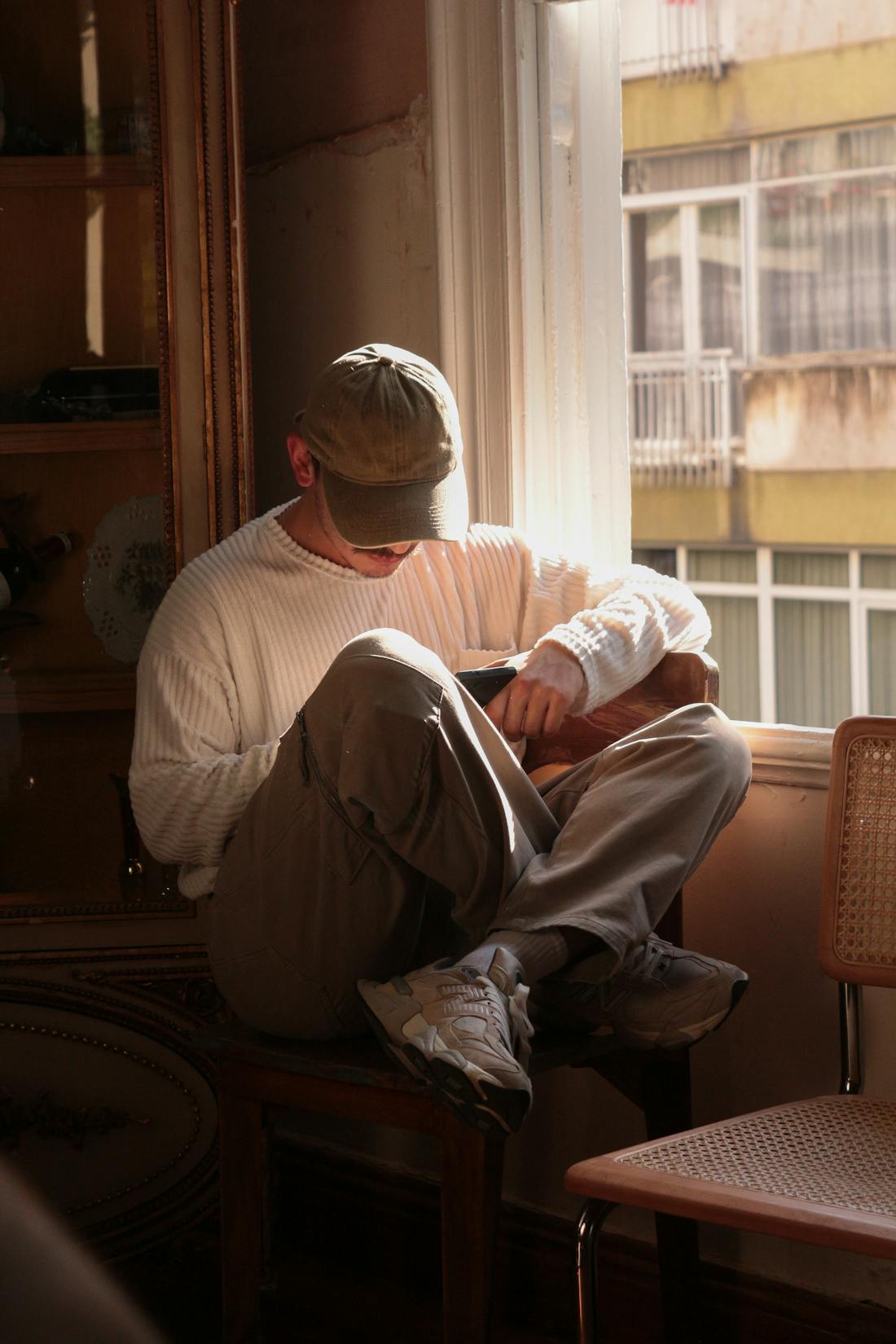
Scroll through Pinterest or TikTok lately and you might have noticed something strange. The “divorced dad aesthetic” is everywhere. Folded flannel shirts on a leather couch. A single mug on a clean kitchen counter. A vinyl record spinning in a sparse apartment. House Beautiful has written about it. Interior designers in Miami and Brooklyn are styling around it. Pinterest searches for the look have exploded over the last year.
It is being treated as a vibe. A look. A meme. Sometimes it is gently mocked, sometimes it is celebrated as “elevated bachelor pad with feelings.” Either way, the trend is real and the conversation around it is loud.
But there is something underneath the aesthetic that almost nobody is talking about. Behind the curated apartment and the moody Spotify playlist is a real person who has, in many cases, gone through one of the hardest experiences a human being can face. And the mental health data on divorced fathers is sobering enough that it deserves a serious conversation — not just a fashion mood board.
What Is the Divorced Dad Aesthetic, Actually?
The “divorced dad aesthetic” describes a specific look that has emerged on social media — a kind of curated, slightly melancholy, post-divorce bachelor space. Think mid-century chairs, a few sentimental objects, soft lighting, and a notable absence of family clutter. It blends adulting with personal taste. It is what happens when someone has to rebuild a home from scratch and chooses to do it intentionally.
Designers describe it as the opposite of the stereotypical “sad-dad” apartment. Instead of an air mattress, a folding chair, and a TV on a milk crate, it is a deliberate space that says, “I am still a whole person. I still have taste. I am building a life.”
That reframe matters. There is something genuinely healthy about taking a hard chapter and saying, “I am not going to pretend this did not happen, but I am also not going to drown in it.” A home that reflects care and intention is, in its own quiet way, a recovery practice.
But here is where the conversation usually stops. The aesthetic gets discussed. The mental health does not.
The Part Nobody Posts About
Divorce is consistently ranked among the most stressful life events a person can experience, second only to the death of a spouse on classic stress scales. For men, the data is especially difficult.
Divorced men face dramatically elevated suicide risk
A meta-analysis published in recent years found that divorced men face a suicide risk roughly four times higher than married men. Other studies have placed the gap even higher — with divorced men sometimes eight times more likely to die by suicide than divorced women. Unmarried men account for the majority of male suicides in the United States.
Depression, anxiety, and isolation are common
Divorced fathers report higher rates of depression, anxiety, alcohol use, and physical health decline than their married peers. The reasons are layered. Loss of daily contact with children. Loss of identity as a husband. Loss of a primary support relationship. Financial strain. Custody stress. Sometimes a deep sense of shame that is hard to admit out loud.
Men often do not call what they feel “depression”
One of the most important things mental health researchers have learned in the past decade is that men experiencing depression frequently do not identify with the word depression. They describe feeling numb, irritable, exhausted, restless, “off,” or just “done.” They are more likely to drink, work longer hours, withdraw, or push through. Many men say outright that public mental health messages — “if you are depressed, seek help” — do not feel like they are talking to them.
This is part of why divorced fathers are so vulnerable. The men who most need support are often the least likely to recognize what is happening or to ask for it.
Why This Matters Especially in Montana
Montana has ranked in the top five states for suicide rate for more than four decades. The state’s most recent age-adjusted suicide rate sits well above the national average. Men account for roughly four out of every five suicide deaths in Montana.
When the Montana Suicide Prevention Program describes a typical case, the picture that comes up again and again is a middle-aged man, recently divorced, often isolated, often with access to a firearm. That is not a marketing line. That is a pattern documented in death certificates reviewed across the state.
Montana culture has historically prized self-reliance, toughness, and the idea of “cowboying up.” Those qualities have built communities and carried families through hard winters. They have also, at times, made it very hard for men to say out loud that they are struggling. Rural distances make it physically harder to reach support. Long winters limit social contact. Alcohol is often the closest available coping tool.
A divorced father in Missoula, Kalispell, Butte, or anywhere in between is sitting inside all of those conditions at once.
What Healthy Recovery Actually Looks Like
Recovery from divorce is not a straight line, and it rarely looks like a Pinterest board. What it looks like in practice is a series of small, unglamorous choices that add up over time.
Acknowledging the loss without minimizing it
Divorce is a grief event. The man who lost his marriage has lost not just a partner but a future he had imagined, a daily rhythm with his children, a financial structure, often a community of in-laws and shared friends. Healthy recovery starts with letting that grief be real instead of forcing it into the shape of “I am fine.”
Staying connected to the kids, even when it is hard
Continued, meaningful contact with children is one of the strongest protective factors for divorced fathers. Even when custody is limited, the quality of time spent matters more than the quantity. Showing up consistently — for school events, phone calls, weekend rituals — protects both the children and the father.
Finding language that fits
Many men do better in therapy when the conversation starts somewhere other than feelings. Discussing sleep, work performance, anger, drinking, parenting frustration, or physical symptoms is often the bridge into deeper work. A good therapist meets a man where he actually is, not where a brochure thinks he should be.
Building a support layer beyond the marriage
After a divorce, many men realize their primary emotional support was their wife. Rebuilding a network — close male friends, a counselor, a faith community, a peer group, even a regular fitness routine with accountability — is not optional. It is structural.
Watching the warning signs
Increased drinking, sleep disruption, social withdrawal, giving away possessions, sudden calm after a long period of distress, or any thoughts of suicide are signals to reach out immediately. The 988 Suicide and Crisis Lifeline is available twenty-four hours a day by call or text.
Why Therapy Works for Divorced Fathers — Even When It Sounds Like the Last Thing They Want
A lot of divorced men carry a quiet belief that therapy is for people who cannot handle things on their own. The truth is closer to the opposite. The men who walk into a counseling office during or after a divorce are usually the ones who have decided that being a good father, a stable employee, and a present friend is more important than keeping up an image of having it all together.
A therapist offers something that is hard to get anywhere else — a confidential, non-judgmental space to think out loud, process grief, work on co-parenting communication, untangle anger, and rebuild a sense of identity that is not dependent on a marriage that no longer exists. EMDR, cognitive behavioral therapy, and grief-focused approaches all have strong evidence behind them for exactly this kind of life transition.
Therapy is also, often, the place where a man finally puts words to things he has carried alone for years. Not just the divorce itself, but the older pains underneath it — childhood loss, a father wound, untreated anxiety, a history of pushing through that finally stopped working.
The Aesthetic Is Fine. The Conversation Underneath It Is Better.
There is nothing wrong with a divorced dad curating a beautiful apartment. There is nothing wrong with leaning into the slow-living, vinyl-and-flannel version of starting over. If it brings comfort and a sense of agency, it is doing its job.
But an aesthetic cannot replace the harder work — the part where a person actually sits with what happened, lets it hurt, talks to someone, and builds something real on the other side. The trend is a doorway. The mental health conversation is the room.
Call or text Sunflower Counseling Montana today to get started: (406) 214-3810 or email hello@sunflowercounseling.com.
Serving clients in person in Missoula, Kalispell, and Butte — and online throughout Montana.
Frequently Asked Questions
Is the “divorced dad aesthetic” actually a real thing or just a meme?
Both. It started as social media shorthand and has been written about in major design publications. The look itself is real. The mental health experience behind it is also real, and far more serious than the trend typically conveys.
Why are divorced fathers at such high mental health risk?
Divorce often involves grief over the marriage, loss of daily contact with children, loss of identity, financial strain, and the disappearance of a primary support relationship. Men also tend to seek help later than women and are more likely to use isolation, alcohol, or overwork as coping strategies, all of which compound the underlying distress.
I do not feel “depressed,” I just feel numb and exhausted. Is that something a therapist can help with?
Yes, and that description is actually one of the most common ways men experience depression. A good therapist will not require a particular label before getting to work. Sleep problems, irritability, low motivation, and emotional flatness are all valid starting points.
I cannot afford to fall apart right now. I am a dad and I have a job. How does therapy fit into that?
Therapy is designed to help functional people stay functional through hard chapters. Sessions are typically once a week or every other week and can be scheduled around work. Many divorced fathers find that therapy actually improves their performance at work and their patience with their kids, rather than taking energy away from those things.
Do you work with men in Missoula, Kalispell, and Butte?
Yes. Sunflower Counseling Montana has offices in Missoula, Kalispell, and Butte, with telehealth available throughout the state. Several of our therapists specialize in working with men, divorce recovery, grief, and life transitions.
What if I am worried about a divorced father in my life right now?
Reach out to him directly. Not with a lecture, but with an invitation — a coffee, a phone call, a fishing trip, time with the kids. If you are concerned about his immediate safety, the 988 Suicide and Crisis Lifeline is available by call or text twenty-four hours a day. You can also call us at (406) 214-3810 to talk through next steps.
About the Author: Kerry Heffelfinger is the founder and CEO of Sunflower Counseling Montana, a multi-location therapy practice offering in-person counseling in Missoula, Kalispell, and Butte, and online therapy throughout Montana.